

5 Quick Diagnostic Checks Before You Call
Before you assume something serious is wrong, run through these five diagnostic checks. They take only a few minutes and can help you pinpoint the problem or rule out simple fixes.
Check 1: Is the Door Actually Stuck or Is It a Sensor Issue?
Press the wall button inside your garage and listen carefully. Does the motor run but the door doesn't move? If the motor is running and nothing happens, a sensor is likely blocking the signal. If you hear absolutely nothing, the issue is electrical. If the door moves slightly then stops, check for obstructions in the track or sensor misalignment.
Check 2: Does Your Remote Have Fresh Batteries?
This sounds obvious, but dead batteries account for more "broken garage door" calls than any actual mechanical failure. Replace the batteries in your remote with fresh ones. If the door opens, problem solved. If it still doesn't work, try the wall button instead.
Check 3: Is the Wall Button Working?
Walk to the wall button inside your garage and press it directly. This is the most reliable test because it removes the remote from the equation. If the door opens using the wall button but not the remote, you have a remote transmitter problem, not a garage door problem.
Check 4: Listen for Motor Sounds When You Try to Open It
A functioning garage door opener makes noise when activated. You'll hear the motor engaging, the chain or belt moving, and mechanical engagement. Complete silence means no electrical power is reaching the motor. Humming without movement suggests the motor is trying but something mechanical is jamming it.
Check 5: Have You Experienced Recent Heavy Rain or Humidity Spikes?
Panama City's tropical climate brings significant moisture that can cause temporary binding or sensor failures. If your door failed after heavy rain, high humidity, or salt spray, moisture contamination inside the sensor lenses is a strong possibility. Gently wipe the sensor lenses with a dry cloth and try again.
Panama City's Climate Challenges: How Humidity and Salt Air Damage Garage Doors
Your garage door faces environmental pressures that homeowners in drier climates never experience. Panama City's coastal location means your door contends with 70 to 90 percent humidity levels throughout most of the year, plus salt air that corrodes metal at an accelerated rate.
Why Coastal Humidity Causes Rust and Corrosion Faster in Panama City
Metal components exposed to Florida's humid air oxidize much faster than they would in inland areas. This happens even when metal appears protected because moisture penetrates microscopic gaps and crevices. Springs, cables, hinges, and rollers all contain iron or steel that reacts with both moisture and oxygen. The corrosion weakens these components from the inside out, making them brittle and prone to sudden failure. A spring that might last 15 years in Arizona might only last 8 to 10 years in Panama City without regular maintenance.
Salt Air Effects on Springs, Cables, and Metal Components
Salt air accelerates corrosion dramatically because salt acts as a catalyst for oxidation. When salt particles combine with moisture and sit on metal surfaces, they create a electrochemical reaction that eats through protective coatings quickly. Garage doors installed near the coast or exposed to sea breeze face particularly aggressive corrosion. You might notice white or orange crusty buildup on springs, hinges, or cables. This crusty material is rust, and once it forms visibly, the underlying structural integrity is already compromised.
Seasonal Moisture: Summer Humidity and Spring Rain Damage Patterns
Summer months bring peak humidity when moisture levels remain elevated for weeks. During these periods, condensation forms inside components, leading to rust formation on the interior of springs and mechanical parts you can't see. Spring months bring heavy rains that occasionally flood the bottom seal of your garage door. Water inside the garage means water on your door's bottom track and rollers, creating temporary sticking and eventual corrosion if not dried out promptly.
What Humidity Levels Do Garage Doors Fail At?
Garage door components begin showing stress at humidity levels above 65 percent. At 80 percent humidity or higher, which is common in Panama City, corrosion accelerates significantly. Sensor sensitivity decreases because moisture clouds the infrared lenses. Metal hinges and rollers lose their smooth gliding ability as rust develops on surfaces.
Mechanical Failures: Simple to Complex
Mechanical failures represent the largest category of garage door problems. These issues range from simple wear items to catastrophic failures.
Broken or Damaged Springs: The Number One Reason Doors Won't Open
The torsion spring or extension springs carry the weight of your door. A typical garage door weighs 300 to 500 pounds. The springs balance this weight so the motor only needs to provide a small amount of force to lift or lower the door. When a spring breaks, the motor suddenly must lift the full weight of the door with no assistance. Most modern garage door openers include a safety feature that prevents the door from opening when spring tension is lost, so the door simply won't move.
Torsion Springs Versus Extension Springs: Which Fails First?
Torsion springs are a single metal coil located above the door on a shaft. They experience direct rotational stress. Extension springs are paired springs on either side of the door that stretch and contract as the door moves. Extension springs typically fail first because they endure more stress cycles and corrosion in Panama City's climate. Torsion springs are stronger but more expensive to replace. Both types have rated cycle lives, usually between 10,000 to 20,000 cycles. A cycle is one complete open and close. Most residential garage doors complete 3 to 5 cycles daily, meaning springs typically last 5 to 15 years depending on usage and climate.
Signs Your Springs Need Replacement Before Complete Failure
- The door feels heavy when operating or seems to close too quickly
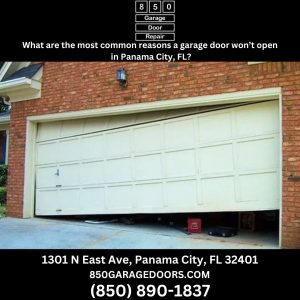
- The door is unbalanced and tilts to one side
- You hear a loud crack or bang when the door opens or closes
- The door only opens a few inches then closes
- Visible cracks or gaps appear in the spring coil
Misaligned Tracks and Bent Rails
The vertical and horizontal tracks guide your door as it moves. If tracks become bent or misaligned, friction increases and the door binds. Small bends or dents might cause the door to wobble. Larger bends prevent movement entirely. Misalignment often results from impact, settling of the garage structure, or corrosion weakening mounting brackets. Tracks can also accumulate rust inside their channels, creating drag and resistance.
Can You Fix Track Alignment Yourself?
Minor track cleaning is safe for homeowners. Removing debris and light surface rust from the interior of the track using a brush and light lubricant is straightforward. However, straightening bent tracks requires special tools and proper technique. Improper alignment creates uneven load distribution on springs and rollers, accelerating wear and potentially damaging other components. Professional technicians have the equipment to measure and correct alignment precisely.
Worn Rollers and Hinges Affecting Door Movement
Rollers ride inside the tracks and allow smooth movement. Over time, repeated movement causes roller wheels to flatten, crack, or accumulate corrosion. In Panama City, rust buildup on roller wheels creates drag and binding. When rollers wear significantly, the door moves roughly and the motor works harder to operate it. Hinges connect sections of sectional garage doors and must flex slightly as the door moves. Worn hinges lose this flexibility and create binding at the hinge points, making the entire door difficult to operate.
Cable Damage or Fraying: Why Replacement Matters
Steel cables attach to the bottom corners of your garage door and wind around pulleys connected to the springs. These cables transmit the spring's lifting force to the door. A broken cable means the door cannot be supported properly and becomes a safety hazard. A fraying cable is a cable in the process of breaking and failure is imminent. Never attempt to operate a door with a damaged cable because the door can drop suddenly and cause property damage or injury.
Electrical and Sensor Issues
If your motor runs but your door doesn't move, or if your door won't respond to any remote or button press, an electrical or sensor problem is likely responsible.
Faulty Photoelectric Sensors Blocking Door Operation
Modern garage doors have two infrared sensors mounted on each side of the opening near the floor. These sensors detect when an object or person is in the door's path and prevent the door from closing. If one sensor becomes misaligned, dirty, or damaged, it sends a constant "obstruction detected" signal to the motor, preventing operation in both directions. Moisture and salt air can damage the sensor lens, causing false obstruction signals. Realigning the sensors or cleaning their lenses often restores function immediately.
Broken Limit Switches Stopping Mid Operation
Limit switches tell the motor when the door has reached the fully open or fully closed position. When a limit switch fails, the motor doesn't know when to stop and the door might reverse or fail to move at all. Some garage door openers have separate limit switches for open and close positions. If only one switch fails, you might be able to move the door in one direction but not the other.
Garage Door Opener Motor Issues and When It Needs Replacement
Garage door opener motors are electric motors designed to run intermittently. A motor that hums but doesn't turn has lost internal power transmission, usually because of a stripped gear. A motor that doesn't hum at all isn't receiving electrical power. Motor replacements require professional installation because they involve working with high tension springs and precise adjustment of safety features.
Power Issues: Breakers, Outlets, and Wiring Problems
Check whether power is actually reaching your garage door opener. Look for a tripped breaker in your electrical panel. Try plugging another device into the outlet where your door opener is connected to verify the outlet has power. If the outlet works but the door opener doesn't, the problem is internal to the opener. Damaged wiring from corrosion or moisture in Panama City's climate can interrupt power flow to the motor even when the circuit isn't tripped.
When DIY Troubleshooting Ends and Why Professional Help Saves Money
Some garage door repairs are genuinely dangerous or require specialized tools. Knowing when to stop troubleshooting yourself prevents expensive mistakes.
Spring Replacement: The One Job You Shouldn't DIY
Garage door springs are under extreme tension and can cause serious injury if they release unexpectedly. Professional technicians use specialized tools to safely release spring tension before replacement. Improper spring installation or adjustment leads to premature failure, unbalanced doors, and potential safety hazards. Spring replacement should always be handled by a professional.
Sensor Calibration and Alignment Issues
While cleaning sensor lenses is safe, realigning sensors requires precision. Sensors must point directly at each other with an unobstructed path between them. Slight misalignment prevents proper function. Professional technicians use alignment tools to verify sensor positioning and make micro adjustments that restore function.
When Quick Fixes Create Bigger, Costlier Problems
Attempting to force a stuck door open by applying extra force, hitting it, or manually lifting it can cause cascading failures. You might bend the track, crack a roller, or damage the door panel. What started as a sensor problem becomes a track replacement problem. Force applied to a door with a broken spring can cause the other spring to fail prematurely because all weight transfers to it. Paying for professional diagnosis now costs far less than paying for multiple repairs later.
How Improper Spring Tension Leads to More Damage
Springs must be adjusted to the exact weight of your door. Too much tension causes the motor to work harder than necessary and wear out prematurely. Too little tension means the motor struggles and the door doesn't operate smoothly. Both conditions accelerate wear on rollers, cables, and the motor itself. Professional installation ensures springs are set to specifications, maximizing component lifespan.
How to Prevent Garage Door Problems in Panama City's Climate
Preventive maintenance extends component life and prevents emergency repairs.
Regular Maintenance Schedule for Humid Coastal Environments
In Panama City's harsh climate, garage doors benefit from professional maintenance twice yearly. Spring maintenance should occur before the heavy summer humidity arrives. Fall maintenance prepares your door for winter and hurricane season. Annual inspections catch early corrosion, component wear, and minor misalignments before they become major failures.
Lubrication, Inspection, and Rust Prevention Tips
Use only garage door specific lubricants on springs, rollers, hinges, and cables. Avoid WD40 and general purpose oils that attract dust and sand. Wipe metal components regularly to remove salt residue and corrosion. Inspect the weather seal at the bottom of your door and replace it if cracked or missing. A good seal prevents water and salt spray from entering the garage and contacting metal components.
Protecting Your Door During Hurricane Season
Before hurricane season, have a professional inspect your door and all hardware. Strong winds put stress on garage door structure and operation. Ensure all fasteners are tight and no components show stress cracks. Keep the door free of debris and obstructions that wind might push into the mechanism.
Common Garage Door Failure Reasons in Panama City, FL
| Failure Type | Why It Happens in Panama City |
|---|---|
| Broken Springs | Salt air and high humidity accelerate metal fatigue. Corrosion weakens springs before they reach normal lifespan. |
| Corroded Cables and Hinges | Metal components exposed to 70 to 90 percent humidity and salt spray rust rapidly. Corrosion weakens load carrying capacity. |
| Sensor and Electrical Failures | Moisture intrusion into sensor lenses and electrical connections causes malfunction. Salt spray corrodes wiring and connections. |
| Stuck Tracks and Rollers | Rust and corrosion buildup inside tracks and on roller wheels creates friction and binding. Rain water trapped in tracks accelerates rust. |
| Motor Wear and Failure | Motors work harder in humid conditions when friction increases. Moisture can seep into motor housings and cause internal damage. |
Take Action Before Your Door Stops Working
A garage door that won't open is more than an inconvenience. It prevents access to your garage, creates a security vulnerability, and signals that components are failing. In Panama City's coastal climate, the aggressive combination of humidity and salt air means garage doors require more attention than doors in other regions.
If your door won't open, start with the five diagnostic checks outlined above. Test your remote battery, try the wall button, and listen for motor engagement. If those quick checks don't solve the problem, the issue involves mechanical, electrical, or sensor failure that requires professional assessment.
Attempting DIY repairs on springs, cables, or motor issues creates safety hazards and often leads to more expensive repairs. Professional technicians have the specialized tools, training, and experience to diagnose problems accurately and fix them right the first time.
Visit 850 Garage Doors to schedule a professional inspection. The team understands Panama City's specific climate challenges and has the expertise to get your door operating safely and smoothly again. Don't wait until your door fails completely. Early professional assessment and maintenance prevent costly emergency repairs and keep your garage secure and functional.