

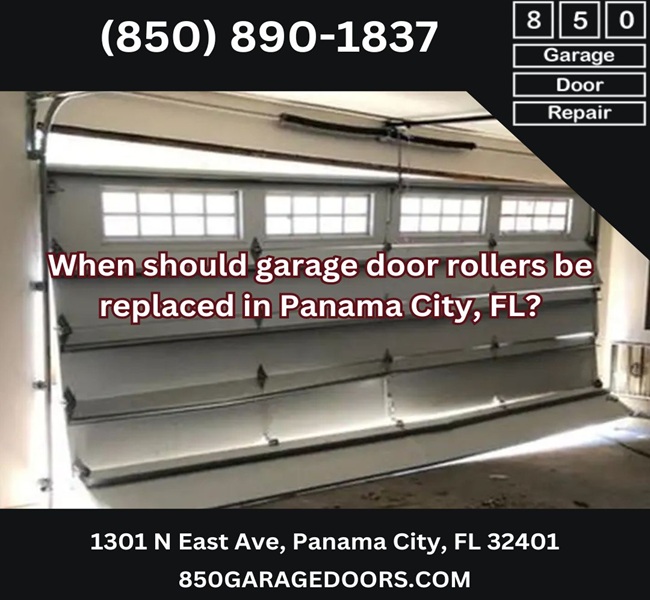
Signs Your Garage Door Rollers Are Worn and Need Attention
Rollers are small, but they carry the full weight of your garage door every time it opens or closes. When they begin to fail, the door communicates that failure in ways that are hard to ignore. The key is knowing what those signals mean before a minor issue becomes a full breakdown. A technician experienced in Garage Door Rollers Repair can identify early wear patterns that most homeowners would not recognize during a casual inspection.
Loud Grinding or Squeaking During Operation
A healthy garage door moves with a low, consistent hum. When you start hearing grinding, squeaking, or a rhythmic clunking sound, the rollers are likely the source. These noises indicate that the ball bearings inside the roller are worn, the roller has lost its lubrication, or the wheel itself has begun to degrade. In humid coastal environments like Panama City, metal components can corrode faster than they wear mechanically, which means the noise can appear earlier than expected.
Occasional squeaking can sometimes be addressed with proper lubrication, but if the sound returns quickly or gets worse, lubrication alone is not the solution. Worn bearings need to be replaced, not masked.
The Door Shakes, Wobbles, or Moves Unevenly
A garage door should travel straight and smooth along its tracks. If you notice shaking, jerking, or one side of the door lagging behind the other, degraded rollers are a likely cause. When rollers are unevenly worn or cracked, they lose their ability to maintain consistent contact with the track. That loss of contact puts uneven stress on the cables, springs, and hinges, which can trigger a cascade of secondary problems.
Left unaddressed, a door that moves unevenly can jump the track entirely, which is a safety event, not just a mechanical inconvenience.
Visible Cracks, Chips, or Flat Spots on the Roller
If you do a visual check on your rollers and see cracking, chipping, or flat spots on the wheel surface, replacement is overdue. Nylon rollers will show cracking and brittleness. Steel rollers will show rust, pitting, or surface erosion. Flat spots on any roller type mean the wheel is no longer round, which causes it to skip rather than roll, placing stress on every component connected to it.
A simple visual inspection takes about two minutes and can tell you a great deal about where your door system stands.
How Panama City's Coastal Climate Accelerates Roller Wear
What works in a landlocked state does not always hold up the same way along the Gulf Coast. Panama City sits in a high humidity, salt air corridor that creates conditions rollers were not necessarily engineered to endure for the full length of their rated lifespan.
Salt Air Corrosion and What It Does to Steel Rollers
Steel rollers are durable and load bearing, but salt air is relentless. Airborne salt particles settle on metal surfaces and initiate a corrosion process that can begin within months of installation if the rollers are not treated or coated for coastal exposure. Once rust takes hold on the bearing housing or the shaft, friction increases and the roller begins to degrade from the inside out.
Homeowners within a few miles of the Gulf or the bay are especially susceptible to this accelerated corrosion. Routine inspection schedules that might work in Atlanta or Birmingham need to be shortened significantly in Panama City.
High Humidity and Its Effect on Nylon Roller Performance
Nylon rollers are often marketed as rust proof, and that is accurate as far as corrosion goes. However, sustained high humidity affects nylon differently. Prolonged exposure to moisture and heat can cause nylon to become brittle over time, especially in an unconditioned garage space where temperatures fluctuate seasonally. The polymer structure weakens, and the roller becomes prone to cracking under load.
In Panama City, a garage that sits unventilated through a long, humid summer can age nylon rollers faster than the manufacturer's rated lifespan would suggest. Inspection matters regardless of roller material.
Nylon vs. Steel Rollers: Which One Holds Up Better Here?
Both roller types have legitimate advantages, and the right choice depends on your specific setup and priorities. Here is a side by side comparison of how each performs in a coastal Florida environment.
| Nylon Rollers in Panama City | Steel Rollers in Panama City |
|---|---|
| Resistant to rust and salt air corrosion, making them a strong fit for Gulf Coast homes near the water | Prone to corrosion from salt air exposure; require more frequent inspection in coastal Panama City locations |
| Operate quietly because nylon absorbs vibration throughout each cycle | Produce more operational noise as bearings wear, especially when lubrication is reduced by humidity |
| Well suited for standard residential doors; may show brittleness in poorly ventilated garages over time | Handle heavier door weights with greater structural strength; ideal for oversized or commercial grade doors |
| Require less frequent lubrication, reducing overall maintenance demand for the average homeowner | Need regular lubrication to perform properly, especially in high humidity conditions common to the Panhandle |
| Recommended inspection every 12 months for coastal Panama City properties to catch humidity related brittleness early | Recommended inspection every 12 months with close attention to rust formation on shafts and bearing housings |
For most Panama City homeowners, nylon rollers with sealed bearings offer the best balance of performance and longevity in a coastal setting. A qualified technician can assess your door weight, track condition, and usage frequency to make the right recommendation for your specific situation.
How Often Should Rollers Be Inspected in Panama City?
The general recommendation for inland areas is a professional inspection every one to two years. In Panama City and across the Florida Panhandle, that interval should be closer to once per year, particularly for homes within close proximity to salt water. The combination of humidity, heat, and airborne salt particles means wear accumulates faster than the national average would suggest.
Annual inspections are not an upsell strategy. They are a practical response to the environment your garage door system actually operates in.
What a Routine Roller Inspection Should Cover
A thorough roller inspection goes beyond a quick visual pass. A trained technician should evaluate the following during each visit.
- Roller wheel surface for cracks, flat spots, chips, or signs of brittleness in nylon
- Bearing condition by spinning the roller manually to check for roughness or resistance
- Roller shaft and bracket for corrosion, looseness, or stress fractures
- Track alignment and clearance to confirm rollers are seating properly throughout the full range of motion
- Lubrication status and application of appropriate product to bearing surfaces where applicable
This type of inspection takes a professional technician a short amount of time but provides a clear picture of how much usable life remains in the system. During the same visit, a technician may also evaluate your Garage Door Openers for any added strain caused by rollers that have been dragging or binding along the track.
Why Worn Rollers Are a Safety Risk, Not Just a Nuisance
It is easy to dismiss a noisy or slightly rough roller as a minor annoyance. The reality is that rollers are a structural component of a system that operates under significant mechanical tension. A standard residential garage door weighs between 150 and 250 pounds. That weight is managed by a precise interplay of springs, cables, tracks, and rollers.
When a roller fails mid operation, the door can drop suddenly, jump its track, or place a surge of unintended force on the torsion spring. Any of those outcomes creates a serious hazard. A door that derails can damage a vehicle, injure a person, or destroy the track system entirely, turning a roller replacement into a much larger repair project.
Proactive replacement is not a luxury. It is a practical safety decision that protects everyone who uses the garage. When spring damage occurs as a direct result of roller failure, Broken Garage Door Spring Repair becomes an immediate necessity that adds significant complexity to what started as a straightforward roller service.
What to Expect When a Professional Replaces Your Garage Door Rollers
Roller replacement is a straightforward service when performed by a trained technician. The process typically involves releasing the door tension safely, removing the old rollers from their brackets, inspecting the surrounding hardware for additional wear, installing the new rollers, and testing the door through several full cycles to confirm smooth and balanced operation.
A professional will also check the track condition during the same visit. If the tracks have developed bends, gaps, or corrosion, those issues can be addressed at the same time to prevent premature wear on the new rollers.
The entire service is generally completed in under an hour for a standard residential door. There is no need to leave your vehicle outside or rearrange your schedule significantly for the appointment. If the technician finds that prolonged roller drag has placed excessive strain on the motor unit, they may also recommend Garage Door Opener Replacement to restore full system reliability and prevent a secondary failure down the road.
Conclusion
Knowing when to replace garage door rollers in Panama City comes down to a combination of time, observation, and an honest accounting of the coastal environment your system operates in. Plan on professional inspection once per year, watch for grinding sounds, visible damage, or uneven door movement, and take those signals seriously rather than waiting for a failure.
Rollers are one of the most affordable components in the entire garage door system to replace proactively. Waiting until they fail can mean dealing with a derailed door, damaged tracks, or a broken spring. The math on early action is straightforward.
If your garage door is showing any of the warning signs covered in this post, or if it has simply been a while since your last inspection, the team at 850 Garage Doors is ready to help. Serving Panama City and the surrounding Florida Panhandle, 850 Garage Doors brings local knowledge and hands on experience to every service call. Reach out through 850garagedoors.com to schedule your inspection or speak with a technician directly.