

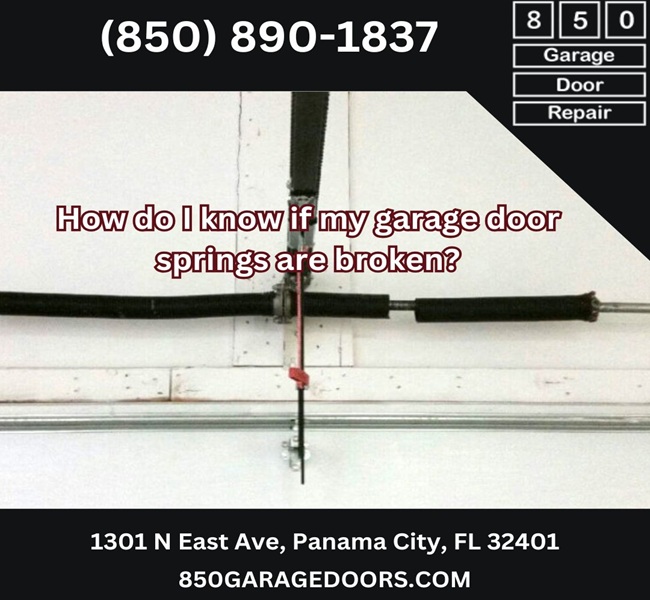
Your garage door springs are likely broken if you notice the door becoming increasingly heavy to open, hear a loud bang or snapping sound, or see it moving unevenly or closing too fast. Most homeowners don't realize that garage door springs are among the hardest working components of their entire home system, and when they fail, the entire door becomes dangerous to operate, often requiring professional garage door repair to restore safe function. Understanding the warning signs not only helps you catch problems early but also protects your family and prevents cascading damage to your opener and door panels. In Panama City and the surrounding Florida coastal areas, the combination of salt air and high humidity creates an especially hostile environment for springs, often shortening their lifespan significantly compared to other regions.
What Garage Door Springs Do (and Why It Matters)
Your Garage Door Springs Are the Hardest-Working Part of Your System
Every time your garage door opens and closes, the springs bear the full weight of your door. A typical residential garage door weighs between 300 and 500 pounds. Without springs, you would need enormous physical strength or an industrial-grade motor just to lift it. Springs do something remarkable: they counterbalance that weight and make lifting possible with minimal effort.
Over the course of their lifespan, garage door springs cycle thousands of times. A typical spring is rated for approximately 10,000 to 20,000 cycles. When you open and close your door twice daily, that translates to roughly 4 to 8 years of normal life. However, in Panama City's humid coastal environment, that timeline compresses significantly.
When springs fail, your door doesn't simply become slightly harder to open. The entire system destabilizes. Your opener motor works overtime, garage door panels experience uneven stress, and safety mechanisms that rely on proper balance become compromised. This is why recognizing spring failure is essential before the problem cascades into a costly emergency repair.
Two Types of Springs: Torsion vs. Extension (and Why It Matters)
Understanding which type of spring system your door uses helps you recognize problems more accurately. Torsion springs are wound coils that twist under tension, sitting horizontally above your garage door opening. Extension springs run vertically along the sides of the door frame and stretch when the door closes. Most residential doors in Florida use torsion springs because they're more durable and provide smoother operation, though some older homes still have extension springs.
Both types can fail suddenly, but the warning signs differ slightly depending on which system you have. Torsion spring failures often produce a dramatic loud bang when they snap because the tension is released explosively. Extension spring failures might show more gradual signs, like the door becoming progressively harder to open before it fails completely.
The 5 Clear Signs Your Springs Are Broken
Sign #1: Your Garage Door Feels Heavy or Won't Open Fully
The most common early indicator of spring failure is that your door feels noticeably heavier when opening. You might press the opener button and notice the motor strains more than usual, or the door moves slower than it normally does. In severe cases, the door may not open at all, or it will open only partially before stalling.
This happens because a broken spring has lost its counterbalancing force. The motor is now trying to lift the full weight of the door without any assistance. Your opener has limits, and it will stop if the load exceeds its capacity for more than a few seconds to protect the motor from burnout.
Sign #2: You Hear a Loud Bang or Snap
A sudden loud bang from the garage, especially if it sounds like a gunshot, is almost always a torsion spring breaking under stress. The metal coil snaps violently and releases all its tension at once. This is one of the most dramatic and unmistakable signs of spring failure.
If you hear this sound, do not attempt to open your door manually or continue using it. The remaining spring (if you have two) is now carrying double the load it was designed for and is at extreme risk of failing as well. A second catastrophic failure could happen within days or hours.
Sign #3: The Door Moves Unevenly or Hangs at Angles
A properly functioning garage door should move straight and level as it opens and closes. If you notice the door tilting to one side, moving unevenly, or appearing to hang lower on one side than the other, this indicates uneven spring tension. One spring may have partially failed or lost tension while the other still functions partially.
This uneven movement creates dangerous stress points on the door panels and door tracks. The panels may rub against the frame, and the entire door can bind up in the tracks, making it jam mid-cycle.
Sign #4: You See Visible Gaps or Separation in the Spring Coil
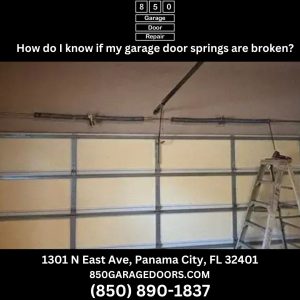
If you can safely observe your springs from inside the garage, look for visible gaps or separation between the coils. A healthy torsion spring maintains consistent tight coil spacing. When you see gaps where the coils have separated, this indicates the spring has lost its structural integrity and tension.
Similarly, extension springs should maintain a consistent appearance. If they look stretched, uneven, or have visible damage, a failure may be imminent. Never try to manually adjust or work on the springs yourself, as the tension can release unexpectedly and cause serious injury.
Sign #5: The Door Closes Too Fast or Falls Suddenly
Some homeowners observe the opposite problem: the door closing far more rapidly than normal, or dropping suddenly with a jerky motion. This can indicate that one spring has failed completely while the other is failing. The remaining spring cannot control the descent properly, and gravity takes over.
A door that falls suddenly is extremely dangerous. It can catch fingers or objects in the bottom seal, damage the garage floor, or even cause the door to derail. This situation demands immediate professional attention.
| Warning Sign | What It Indicates |
|---|---|
| Heavy door or won't open fully | Spring tension is lost; motor strain increases trying to lift full weight |
| Loud bang or snap sound | Torsion spring has snapped suddenly under tension; immediate risk of second failure |
| Uneven or tilted door movement | Uneven spring tension between left and right sides creating panel stress |
| Visible coil gaps or separation | Spring has lost structural integrity and tension; failure is imminent |
| Door closes too fast or falls suddenly | One spring failed; remaining spring cannot control descent; extreme safety hazard |
Why Broken Springs Get Worse in Coastal Florida
How Salt Air and Humidity Accelerate Spring Deterioration
Garage door springs are made from high-carbon steel, a material chosen for its strength and ability to flex repeatedly without breaking. However, steel has a significant weakness: it corrodes rapidly when exposed to moisture and salt air. In Panama City, you're living in one of the most corrosive environments in Florida for metal components.
The salt air near the coast is particularly aggressive. Salt particles carried by ocean breezes settle on exposed metal surfaces. Combined with Florida's high humidity and temperature fluctuations, these conditions create an electrochemical reaction that slowly eats away at the spring's surface. As rust develops, the metal becomes brittle and weakens structurally.
A spring that might last 12 to 15 years in a dry climate inland can deteriorate to failure in 7 to 10 years in Panama City. The corrosion isn't always visible at first. Springs can look relatively normal on the outside while rust has compromised their internal integrity, making them vulnerable to sudden failure under normal operation stress.
Why Panama City Springs Corrode Faster Than Other Regions
Panama City's proximity to the Gulf of Mexico, combined with the city's coastal subtropical location, creates what engineers call a "highly corrosive environment." The National Association of Corrosion Engineers designates coastal Florida zones as Category C5-M (very high corrosivity), meaning metal components experience accelerated deterioration.
Beyond salt air, the region's consistent high humidity and regular temperature swings between hot days and cooler nights create moisture cycling. This continuous expansion and contraction of the spring material, combined with corrosion, weakens the metal's ability to handle stress. The combination is far more damaging than any single factor alone.
For homeowners in Panama City, this means your garage door springs are working in an environment that's actively hostile to their longevity. Regular professional inspections become even more critical because failure can happen with less warning than in other areas.
The Hidden Costs of Delaying Spring Repair
Emergency Repairs Cost More Than Planned Maintenance
When springs fail suddenly, you're forced into an emergency repair situation. You can't use your garage door, and depending on your home's layout, you may be unable to access your garage safely. This creates urgency, and urgent service calls always carry higher costs than planned, scheduled maintenance.
Beyond the immediate spring replacement, emergency failures often damage other components. A door that falls suddenly can misalign tracks, bend panels, or damage the motor. A spring that snaps abruptly can damage the pulley system or cable assemblies. What started as a spring replacement becomes a multi-component repair project.
Recognizing early warning signs and addressing them during normal business hours costs significantly less than calling for emergency service at night, on weekends, or during peak season.
Broken Springs Create Secondary Damage to Your Door and Opener
Your garage door opener motor is engineered to lift a properly balanced door. When springs fail, the motor suddenly faces a dramatically increased load. If you continue trying to operate the door with broken springs, the motor overheats, the gears inside strip, and the entire opener may burn out.
Similarly, damaged springs put uneven stress on the door panels and frame. Panels crack, welds fail, and the structural integrity of the entire door assembly declines. What could have been a spring replacement alone becomes a situation requiring opener replacement and possibly new panels.
The door tracks themselves can bend or misalign if the door moves unevenly due to spring failure. Bent tracks then cause additional stress on the motor and make future repairs more complicated and costly. The domino effect of ignoring spring problems multiplies repair expenses quickly.
What Happens When Springs Fail: And Why Professional Help Matters
Can I Use My Garage Door With Broken Springs? (The Safety Answer)
No. Operating a garage door with broken or damaged springs is unsafe and should not be attempted. A broken spring system creates multiple hazards that put people and property at risk.
When springs fail, the door can drop unexpectedly, creating a pinch hazard for fingers, hands, or objects in the frame. The door can derail from its tracks, becoming a falling object. The sudden movement can startle someone standing nearby and cause injury from the shock alone.
What Happens to Your Opener Under Extra Load
Your garage door opener is designed with specific torque and force limits. These limits exist to protect people and property. When springs fail, the opener senses increased load and can shut down automatically. However, some older openers lack adequate safety stops. Operating them repeatedly with failed springs causes the motor to overheat, gears to strip, and eventually the entire opener to fail.
The opener's circuits can also fail from the electrical stress of trying to move an unbalanced load repeatedly. This renders the opener inoperative, requiring complete replacement rather than simple repair.
Damage Timeline: From One Broken Spring to Full System Failure
If you have two torsion springs and one breaks, you're entering a dangerous timeline. The remaining spring must now carry the full load it was only half-responsible for before. This doubles the stress it experiences with every cycle.
The second spring, now under double stress, can fail within days or hours. Some homeowners have experienced the second spring failure happening within 24 to 72 hours of the first one breaking. Once both springs are gone, the door becomes completely immobile and cannot be safely operated.
Why DIY Spring Replacement Is Dangerous
Springs store enormous amounts of energy. Torsion springs are under tension that maintains the equivalent of hundreds of pounds of force. If you attempt to remove, adjust, or replace them without proper tools and training, that energy can release unexpectedly and cause severe injury.
Springs can snap and strike you with enough force to cause serious wounds, broken bones, or worse. The shaft that the springs wind around can also rotate suddenly and cause crushing injuries. Even experienced DIYers have been seriously injured attempting garage door spring work.
Spring Tension and How It Can Cause Serious Injury
Torsion springs are typically wound with several thousand turns under extreme tension. Releasing this tension requires precise knowledge of the spring's specifications, proper safety equipment, and experience controlling the energy release. A single mistake can be catastrophic.
Extension springs are somewhat less dangerous than torsion springs, but they also carry significant tension and require proper tools to remove safely. The cables attached to extension springs can snap under tension and strike you with enough force to cause lacerations or eye injuries.
The Liability You Take On Doing It Yourself
Beyond the physical danger, attempting DIY spring replacement creates legal and insurance liability. Most homeowner insurance policies don't cover injuries resulting from attempting to repair major home systems yourself. If someone is injured due to improper spring installation or repair, you could face personal liability.
Additionally, if your garage door system malfunctions after DIY spring work and causes property damage or injury, you may be liable for those damages even if you didn't intend harm. Professional installation comes with proper insurance coverage and liability protection.
Conclusion
Recognizing the signs of broken garage door springs is one of the most important skills a homeowner can develop for safety and financial protection. A heavy door, loud banging sounds, uneven movement, visible gaps in coils, or a door that closes too quickly are all signals that your springs need professional evaluation immediately.
For homeowners in Panama City and coastal Florida, the reality is that your springs are working in a corrosive environment that accelerates their deterioration. What might be a 12 to 15 year lifespan in other regions can compress to 7 to 10 years here. This makes regular professional inspections even more critical for your safety and your wallet.
Addressing spring problems early prevents emergency repairs, protects your motor and door panels, and most importantly, keeps your family safe. If you've noticed any of the warning signs described in this article, don't wait. Contact the professionals at 850 Garage Doors for a thorough inspection. They can assess your spring system, identify problems before they become emergencies, and perform repairs with the proper tools and expertise your family deserves. Visit 850garagedoors.com to learn more or reach out today for peace of mind knowing your garage door is operating safely.