

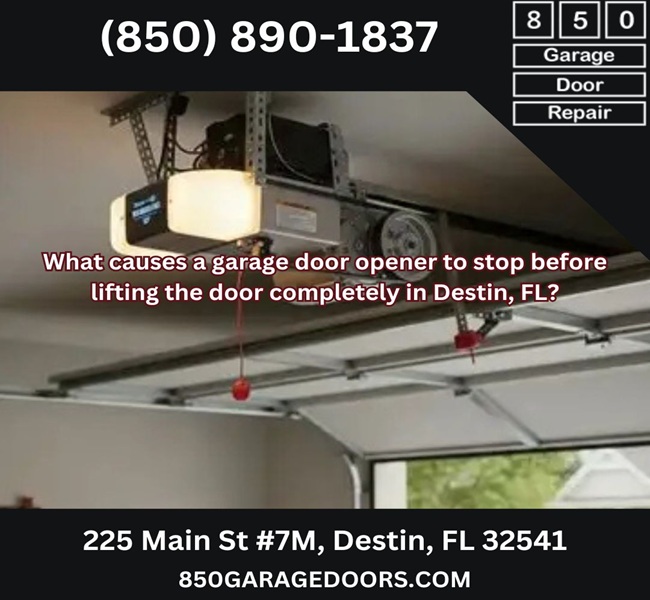
A garage door opener usually stops before the door is fully open because something is telling it to stop early or something is making the door too hard to finish lifting. In most Destin homes, the cause falls into one of two groups: the opener settings that control how far and how hard the motor works, or a mechanical part along the door that has worn down and added resistance. This matters because a door that stops partway is rarely a random glitch. It is often an early warning that a spring, roller, or track is wearing out. Catching the reason early keeps a minor garage door repair from turning into a stuck door, a safety risk, or a vehicle trapped in the garage.
What Makes an Opener Stop Partway Up
Every garage door opener works as a partnership between the motor and the door hardware. The motor provides the pulling power, and the door, springs, rollers, and tracks decide how much effort that pull requires. When an opener stops before the door reaches the top, the problem sits on one of those two sides. Either the opener has been told to stop at that point, or it is meeting more resistance than it is allowed to push through.
Travel and Force Limit Settings That Cut the Lift Short
Modern Garage Door Openers use two important settings. The travel limit tells the motor how far to move the door before stopping. The force limit tells the motor how much pulling effort is safe before it assumes something is in the way and stops for safety. If the travel limit is set too short, the door stops early even when nothing is wrong with the hardware. If the force limit is set too low, the motor gives up the moment it feels normal resistance, such as a slightly stiff roller. These settings can drift over time, especially after a power outage or a battery backup reset, both common during Gulf Coast storm season.
Hardware Problems That Make the Door Too Heavy to Finish
When the settings are correct, the next suspect is the door itself. A garage door is heavy, and the opener is only designed to guide a door that the springs already do most of the work to lift. If any part of that system adds friction or weight, the opener can run out of safe pulling force before the door reaches the top.
Worn Rollers and Binding Tracks
Rollers guide the door along the track on small wheels and bearings. As they wear, they stop spinning freely and begin to drag or bind inside the track. That drag increases resistance, and the opener may stop when it hits the tightest point. A door that pauses or struggles at the same height each time often points to a roller or track issue at that spot, a problem resolved by professional Garage Door Rollers Repair.
Weak or Failing Springs
Springs carry the real weight of the door. Torsion and extension springs store tension that balances the door so the opener barely has to work. As springs weaken or lose tension, the door becomes heavier from the opener's point of view. The motor then reaches its force limit partway up and stops. A door that feels very heavy when lifted by hand, or one that will not stay open halfway, usually has a spring nearing the end of its life and a clear case for Broken Garage Door Spring Repair.
Bent Sections or Misaligned Track
Tracks need to stay straight and properly aligned for the door to glide smoothly. A small dent, a loose bracket, or a section knocked out of alignment can create a pinch point. The door moves freely until it reaches that spot, then stalls. This is common after a minor bump from a vehicle or after years of vibration loosen the mounting hardware.
Why This Happens Faster Near the Destin Coast
Garage doors in Destin face conditions that inland doors never deal with. The same parts that decide whether a door finishes its travel are the parts most affected by coastal air. That is why a fault that might take years to appear elsewhere can show up much sooner here.
Salt Air Corrosion on Rollers, Hinges, and Springs
Salt carried in from the Gulf settles on metal and speeds up corrosion. Rollers, hinges, springs, and fasteners all rust faster near the coast. Rust adds friction to moving parts and weakens springs from the inside. A spring that has lost strength to corrosion can fail to balance the door, leaving the opener to strain and stop short.
Humidity and Heat Cycling That Add Drag
Gulf humidity keeps moisture on metal surfaces almost year round, which feeds corrosion and washes away lubrication. Heat is the second factor. Garage spaces in the Florida Panhandle swing between hot days and cooler nights, and that constant expansion and contraction loosens hardware and dries out the grease inside rollers and bearings. Over a season or two, parts that once moved smoothly begin to drag, and the opener feels every bit of that added resistance.
Warning Signs to Watch Before the Door Fails Completely
A door that stops short rarely fails all at once. It usually gives signals first. Learning to read those signals helps you tell the difference between a quick adjustment and a part that is about to break. The table below pairs common symptoms with the cause they most often point to.
| Symptom | Likely Cause |
|---|---|
| Door stops at the same height every time | Worn roller or a track problem at that point |
| Door stops higher or lower at random | Travel or force limit setting drifting |
| Motor strains, hums, or runs slowly | Weak spring or rising friction in the hardware |
| Door feels very heavy when lifted by hand | Spring losing tension or nearing failure |
| Grinding or squealing as the door moves | Dry, rusted, or worn rollers and bearings |
If you notice any of these signs alongside a door that stops partway, treat it as a reason to inspect the system soon rather than wait. Coastal wear tends to move quickly once it begins, and a small drag today can become a stuck door within a few weeks.
Safe Checks First, Then What a Technician Covers
Simple Checks Before You Call
There are a few safe things a homeowner can check without tools or risk. Make sure nothing is blocking the track or the photo sensors near the floor. Watch whether the door stops at the same spot or a different spot each time, since that clue helps a technician later. You can also listen for new sounds such as grinding or straining. What you should not do is adjust springs or force settings yourself. Springs hold enormous tension, and a wrong move can cause serious injury.
What a Professional Inspection Covers
A trained technician looks at the whole system rather than one part. The inspection usually includes testing spring tension and balance, checking rollers and bearings for wear, examining the track for bends or loose brackets, and confirming the travel and force settings match the door. On coastal homes, a good technician also looks for corrosion that is not yet visible at a glance, since rust often starts inside springs and bearings before it shows on the surface. That full picture is what separates a lasting repair from a temporary reset that fails again within weeks. When a motor is worn beyond a reliable fix, the same inspection can confirm whether a Garage Door Opener Replacement is the better choice.
Frequently Asked Questions
Can resetting the travel limits fix a door that stops too soon?
Sometimes. If the only issue is a travel setting that drifted, a proper reset can restore full movement. If the door is also heavy or noisy, the setting is usually a symptom of a deeper hardware problem, and a reset alone will not hold.
Is it safe to keep using a door that stops before it opens fully?
It is better to limit use until the cause is known. A door that stops short can hide a weakening spring, and a spring that fails suddenly can drop a door or leave it stuck. Treat repeated stopping as a reason to have the system checked.
How can I tell a force setting problem from a spring problem?
A quick test is to lift the door by hand with the opener disconnected. If it feels very heavy or will not stay open on its own, the springs are likely the issue. If it lifts easily by hand but the opener still stops, the force or travel setting is the more likely cause.
Does coastal weather really shorten the life of these parts?
Yes. Salt air, humidity, and heat cycling all speed up corrosion and wear on rollers, springs, and fasteners. Doors near the Gulf often need maintenance sooner than the same door would inland, which is why regular service matters more in this area.
Bringing It All Together
When a garage door opener stops before the door is fully open, the reason almost always comes down to settings that cut the lift short or hardware that has added too much resistance for the motor to finish. In Destin, salt air, humidity, and heat speed up that wear, so springs, rollers, and tracks tend to show problems sooner than they would inland. The encouraging part is that these issues follow clear patterns. By paying attention to where the door stops, how it sounds, and how heavy it feels by hand, you can catch trouble early and avoid a stuck door or a safety risk. If your door is stopping short of the top, the team at 850 Garage Doors can inspect the full system, find the real cause, and restore safe, smooth operation. Reach out or visit 850garagedoors.com to learn more or schedule a visit.