
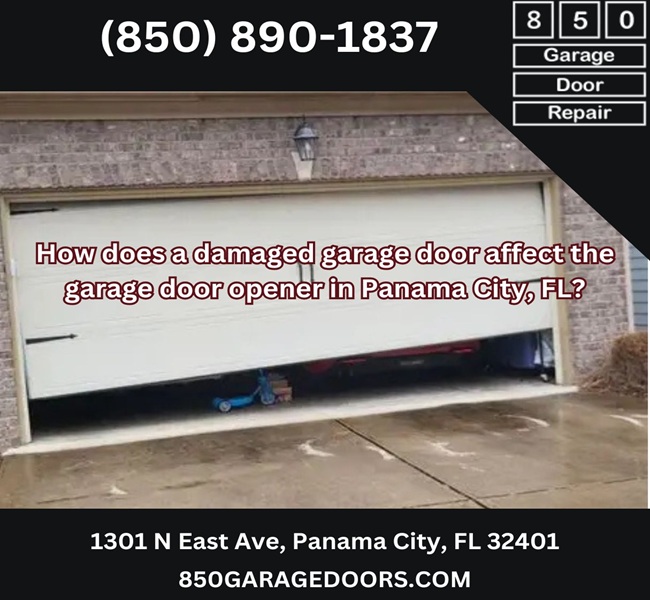
A damaged garage door forces the opener to lift weight it was never designed to handle, which strains the motor, wears down the gears, and shortens the life of the entire unit. Many homeowners in Panama City assume the opener is the part that failed, when the real cause is a door problem that quietly pushed the opener past its limits. If your door has started moving slowly, making new sounds, or struggling to open on humid mornings, the opener is often the first place that stress shows up. Understanding how the two work together helps you catch a small garage door repair before it turns into a full opener replacement. This guide explains exactly how door damage travels into the opener and what to watch for along the Gulf Coast.
Why a Damaged Door Forces the Opener to Work Harder
The opener is one of the most misunderstood parts of a garage door system. People tend to think of it as the muscle that lifts the door, but it actually plays a much smaller role than most homeowners expect. When the door is damaged, that misunderstanding becomes expensive, because the opener ends up doing a job it was never built for.
The Opener Guides the Door, the Springs Do the Lifting
A garage door is heavy, often weighing well over a hundred pounds. The springs mounted above or beside the door carry almost all of that weight through a counterbalance system. When everything works correctly, the springs hold the door in near perfect balance, and the opener simply guides it up and down with very little effort. A balanced door can be lifted with one hand. The opener motor is sized for that light guiding task, not for hauling the full weight of the door on its own. Once damage upsets that balance, the opener has to make up the difference, and that is where the trouble starts.
What Constant Strain Does to the Motor and Gears
When a door no longer moves freely, the opener compensates by pulling harder on every cycle. That extra load raises the temperature of the motor, speeds up wear on the plastic and metal gears inside the unit, and forces the logic board to push more power than the design intended. Over weeks and months, the gears can strip, the motor can overheat and shut down for safety, and the travel and force settings can drift out of range. A door that opens several times a day puts the opener through thousands of strained cycles, so a problem that feels minor at first can quietly destroy the opener from the inside.
Types of Door Damage That Affect the Opener Most
Not every door issue affects the opener the same way. Some types of damage create a steady drag, while others cause sudden binding that can jolt the motor and gears. The table below shows the most common forms of door damage we see in the Panama City area and how each one tends to affect the opener.
| Type of Door Damage | Effect on the Garage Door Opener |
|---|---|
| Broken or weak spring | Opener carries the full weight of the door, leading to motor overheating and stripped gears. |
| Bent or misaligned track | Door binds and catches, forcing the opener to push against resistance on every cycle. |
| Worn or seized rollers | Rough movement adds drag, making the motor work harder and run longer than normal. |
| Warped or sagging panel | Uneven weight and friction throw off the balance the opener depends on. |
| Door off its track | Severe binding can stall the motor, trip the safety reverse, or damage the drive system. |
Broken or Weakened Springs
Springs are the part most directly tied to opener strain. A broken or weakened spring removes the counterbalance, so the opener suddenly carries weight it was never meant to lift. This is the fastest way to burn out a motor. If you hear a loud bang from the garage and the door then feels heavy or refuses to open, a spring has likely failed, and scheduling Broken Garage Door Spring Repair quickly will protect the opener from further damage.
Bent Tracks and Worn Rollers
The tracks and rollers guide the door along a smooth path. When a track is bent from a bump or rust, or when rollers wear down and stop spinning freely, the door drags and catches as it moves. The opener feels this resistance on every open and close, and that constant fight wears the gears and motor far faster than normal use would. Prompt Garage Door Rollers Repair removes that drag so the opener can glide the door as it should.
Warped or Sagging Panels
Panels can warp from moisture, heat, or impact. A warped or sagging panel changes how the door sits in its frame, creating friction points and throwing off the careful balance the springs and opener rely on. The opener then has to overcome uneven resistance, which leads to jerky movement and added strain over time.
How Panama City Coastal Conditions Speed Up the Damage
Living near the Gulf Coast puts extra pressure on every part of a garage door system. The salt in the air is one of the biggest culprits. Salt air settles on springs, hinges, tracks, and rollers, and it speeds up rust and corrosion far faster than in inland areas. Corroded springs lose strength sooner, rusty rollers seize up, and pitted tracks create the exact drag that overworks the opener.
Humidity adds another layer of stress. The constant moisture along the coast can swell wooden panels, encourage rust on metal parts, and seep into the opener housing, where it affects the circuit board and electrical connections. Then there is the heat. Daily temperature swings cause metal parts to expand and contract, a process known as heat cycling, which loosens hardware and wears moving parts over time. A garage that bakes in the afternoon sun also raises the temperature inside the opener motor, leaving less room before it overheats while fighting a damaged door.
Taken together, these coastal conditions mean a door problem in Panama City often reaches the opener faster than the same problem would somewhere drier and cooler. That is why local homeowners benefit from catching damage early rather than waiting for the opener to fail.
Warning Signs the Opener Is Straining and When to Call a Professional
Your opener usually gives you clear signals before it quits. Paying attention to these early warning signs can save the motor and prevent a sudden breakdown at the worst possible moment.
- The door opens or closes more slowly than it used to.
- The motor sounds louder, grinds, or hums without much movement.
- The door jerks, stutters, or stops partway through a cycle.
- The opener struggles more in the morning or after heavy rain.
- You notice a burning smell, or the motor shuts off and needs time to cool down.
When you see these signs, the smartest move is to stop running the opener and have the door inspected. A trained technician checks the spring balance by disconnecting the opener and lifting the door by hand, looks for bent tracks and worn rollers, inspects the panels for warping, and tests the opener force and travel settings. Fixing the door first protects the opener, because once the door moves freely again the opener returns to the light guiding task it was built for. Most Garage Door Openers are built to last for years when the door they serve stays balanced and moves smoothly. Trying to push through the problem, or only replacing the opener without addressing the door, usually leads to the new unit failing the same way.
Frequently Asked Questions
Can a damaged garage door burn out the opener motor?
Yes. When a door is hard to move because of a broken spring, bent track, or seized roller, the opener carries far more load than it was designed for. That extra strain overheats the motor and wears the gears, and over enough cycles it can burn the motor out completely. This is one of the most common ways openers fail before their time.
Should I repair the door or replace the opener first?
In most cases the door comes first. The opener is often a victim of the door problem rather than the original cause. If you replace the opener but leave a damaged door in place, the new unit faces the same heavy load and tends to fail again. A technician can confirm whether the opener was damaged by the strain or simply reached the end of its working life, the point where Garage Door Opener Replacement becomes the better choice.
Is it safe to keep using the opener with a damaged door?
It is not. A door that is binding, off balance, or off its track can fall, jam, or move unpredictably, which is a safety risk for people, pets, and vehicles. Continuing to run the opener also adds damage to the motor and gears with every cycle. The safer choice is to stop using the door and schedule an inspection.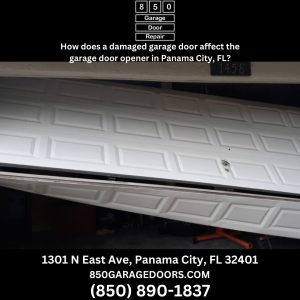
Protecting Your Opener Starts With a Healthy Door
A damaged garage door rarely stays just a door problem for long, because the opener is the first part to absorb the extra strain. Broken springs, bent tracks, worn rollers, and warped panels all push the opener past the light guiding job it was built for, and the salt air, humidity, and heat along the Gulf Coast only speed that wear up. The good news is that the warning signs are easy to spot once you know what to listen and watch for, and catching them early usually means a simple door repair instead of a full opener replacement. If your opener in Panama City has started straining against a door that no longer moves the way it should, the team at 850 Garage Doors can inspect the system, find the real cause, and get both the door and the opener working together again. Reach out or explore more at https://www.850garagedoors.com/ to keep your garage running safely and smoothly.