

No, garage door opener motors are not universal.
While some components of garage door openers may be interchangeable, the motors vary significantly by brand, type, compatibility, and intended use. If you're a homeowner in Panama City, Florida, or elsewhere dealing with a garage door repair, understanding whether your opener motor can be swapped out with another brand or model involves more than just matching size and shape—it involves ensuring seamless operation and long-term reliability.
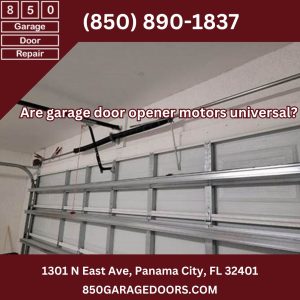
Understanding Garage Door Opener Motors
Garage door opener motors are the heart of the automatic garage door system. They power the mechanism that opens and closes the door, handling the weight and movement smoothly and safely. However, not all motors are created equal, and that's where the idea of interchangeability—or universality—falls short.
There are various motor types, including:
- Chain-drive motors: Common and reliable but can be noisy.
- Belt-drive motors: These are quieter and ideal for attached garages.
- Screw-drive motors: Fewer moving parts, but sensitive to temperature fluctuations.
- Direct-drive motors: Quiet and have only one moving part—the motor itself.
These different types cater to various needs, making it hard to claim that any one motor is universal. Additionally, each brand uses proprietary technology and rail systems that aren't always compatible with others.
What Affects Compatibility?
Several factors determine if a garage door opener motor can be swapped with another:
Rail and Trolley System
The rail connects the motor to the garage door. Some brands manufacture proprietary rail designs, meaning a motor from Brand A may not fit the rail system of Brand B. Trying to mix and match could lead to serious functionality issues or safety hazards.
Door Size and Weight
Garage doors come in various sizes and materials—from lightweight aluminum to heavy-duty wood. Each motor is rated for a specific weight range and door height. Installing an underpowered or incompatible motor could lead to strain, overheating, or premature failure.
Horsepower Rating
Although this blog avoids price discussions, the motor's horsepower rating is critical. It determines the motor's lifting capacity. Again, not all doors require the same power, so matching the correct horsepower to your garage door setup is vital.
Smart Features and Connectivity
Modern motors often have Wi-Fi capability, smartphone integration, and even voice assistant compatibility. Motors with advanced features may not work with older wall panels, remotes, or sensors from another system, rendering parts of your setup useless.
Safety Features
Garage door openers now include critical safety elements, such as automatic reversal and sensor alignment. Mixing components that don't communicate well can compromise your door's safety system. This is a big concern in garage door repair situations, especially for families with children or pets.
Common Misconceptions About "Universal" Motors
Let's break down some of the most common myths:
Myth #1: "All motors fit all openers."
This is false. Motors differ in mounting brackets, connection types, wiring, and software. Newer models might not work with older systems, even within the same brand.
Myth #2: "Just match the voltage, and it'll work."
Voltage is just one part of the puzzle. A motor may run on the same voltage, but it's incompatible if it doesn't connect to the existing controls or rails.
Myth #3: "Garage doors are all the same."
Every garage door setup is different. The door material, weight, ceiling height, and usage frequency all impact the best motor for the job.
The Risk of DIY Motor Replacement
It might be tempting to take on the task of replacing your garage door motor yourself, especially if you assume all motors are the same. But here's why that's risky:
- Wiring Mistakes: Improper connections could damage the motor or cause electrical hazards.
- Misalignment: If the motor isn't aligned perfectly with the rail, it can cause stress on both the opener and the door.
- Warranty Void: DIY installations often void manufacturer warranties.
- Safety Hazards: Failing to reconnect safety sensors or limit switches could make the door dangerous.
For Panama City, Florida residents, it's essential to know that garage door opener repair and replacement involves technical knowledge beyond standard handyman work.
Can I Use My Old Remote with a New Motor?
This is another area where "universal" does not apply. Some remotes and wall panels are designed to work only with specific opener models. Even if they use the same frequency, the coding system may differ so they won't communicate with the new motor.
Some universal remotes exist, but they're limited in function and may not support advanced features like MyQ or Wi-Fi-based control.
Signs You May Need a New Garage Door Motor
Here are a few indicators that your motor might be failing:
- Loud grinding or clicking noises
- The door opens slowly or gets stuck
- The motor runs, but the door doesn't move
- Unresponsive remote or wall switch
- Frequent need to reset the system
In these cases, a garage door repair specialist can assess whether the issue is in the motor or another component, such as the sensors, limit switches, or trolley carriage.
When Does a Full Garage Door Opener Replacement Make Sense?
You might consider replacing the complete opener unit if:
- Your motor is over 10 years old
- The safety sensors no longer work
- Your system lacks modern features like a battery backup or Wi-Fi
- You're upgrading to a quieter or more efficient model
Replacing the entire system ensures that all parts are built to work together seamlessly.
Final Thoughts: Don't Rely on "Universal" Assumptions
In garage door repair, assuming universal motors can lead to more problems than solutions. Brands, motor types, horsepower ratings, safety features, and connectivity all differ—and what works in one system may not work in another.
For those in Panama City, Florida, or any area with frequent garage door use due to weather, vehicle storage, or home design, keeping your opener motor in top shape is more than a convenience—it's about safety and peace of mind.
Get Help from a Professional
Garage door opener motors are intricate components that require proper alignment, electrical safety, and compatibility checks. While DIY resources are available, seeking help from a professional ensures the job is done right the first time—saving you time, hassle, and future repair costs.
Whether you're experiencing motor failure or just want to upgrade your system, contact a qualified garage door repair technician who can guide you through the process safely and efficiently.