

How the Opener Controls More Than Just the Motor
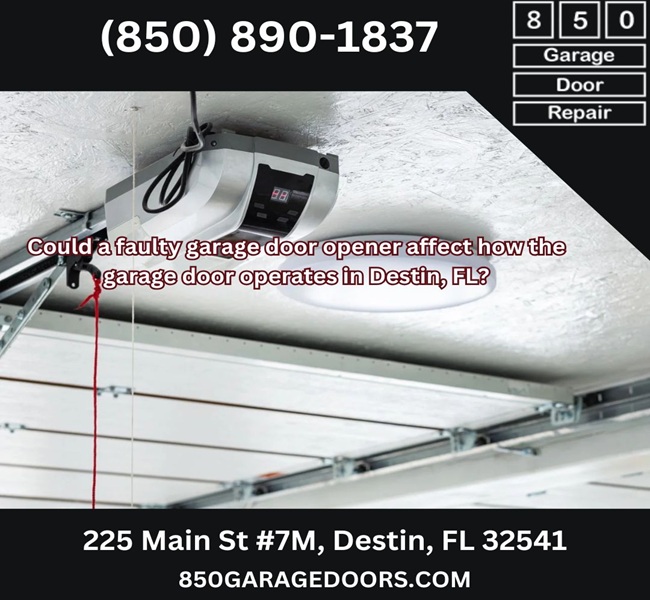
Many homeowners assume a garage door opener is little more than a motorized pulley. In reality, modern Garage Door Openers are sophisticated systems that manage every stage of the door cycle. From the moment you press the remote or wall button, the opener is sending signals to the motor, communicating with the safety sensors near the floor, and applying precise force limits to prevent the door from closing on an obstruction.
Inside the opener unit, the logic board serves as the brain of the entire operation. It receives input signals, interprets them, and sends commands to the motor and drive system. The drive system, whether chain, belt, or screw driven, then translates that electrical command into physical movement. Limit switches tell the opener where the door should stop at the top and bottom of its travel. Force adjustment settings control how hard the motor pushes or pulls.
When any one of these components starts to deteriorate, the door does not just stop working entirely. Instead, it begins to behave in erratic, inconsistent, or unsafe ways. The problem is often misidentified as a mechanical issue with the door itself, which leads to delayed repairs and, in some cases, unnecessary part replacements.
Warning Signs the Opener Is Affecting Door Performance
A failing opener rarely announces itself with a single dramatic failure. More often, it sends a series of early warning signals that are easy to dismiss as minor quirks. Recognizing these signs early gives you the opportunity to address the problem before it escalates into a complete breakdown or a safety hazard.
Slow or Stuttering Door Movement
A garage door that used to open smoothly but now moves slowly, stutters, or stops partway through its cycle is often pointing to an opener problem. The motor may be struggling to deliver consistent power due to worn brushes, overheating, or internal corrosion on the circuit board. In Destin, where high humidity is a constant reality throughout the year, moisture intrusion into the opener housing is a common cause of motor underperformance.
Slow movement can also result from a misadjusted force setting. When the opener senses more resistance than expected, it may reduce speed or stop entirely as a protective measure. This behavior is by design, but it can be triggered unnecessarily when internal components are degraded and the opener is miscalibrating the force required to move the door.
Doors That Reverse Without a Clear Reason
If your garage door begins to close and then reverses back up without touching anything, the opener is almost certainly involved. Safety reversal systems in modern openers are sensitive by design, which is appropriate. However, when the logic board, limit switches, or force settings are compromised, the opener may interpret normal door resistance as an obstruction and trigger a reversal unnecessarily.
In Destin, heat cycling between the cool interior of a climate controlled garage and the outdoor temperatures during summer months causes expansion and contraction in the opener housing. Over time, this physical stress can loosen internal connections or cause components on the circuit board to shift, resulting in false obstruction readings and unwanted reversals.
Inconsistent Response From the Remote or Wall Button
An opener that works sometimes and not others is one of the more frustrating symptoms homeowners report. You press the remote and nothing happens. You press it again and the door opens. This inconsistency is often attributed to a dead battery, but when a fresh battery does not solve the problem, the issue typically lies within the receiver circuit inside the opener itself.
Salt air corrosion is a widely recognized challenge along the Gulf Coast. The receiver board inside the opener is vulnerable to the same corrosive environment as any other metal or electronic component in a coastal home. Corroded contact points on the receiver reduce signal sensitivity, causing intermittent responses that grow more frequent as the corrosion spreads.
How Destin's Coastal Environment Accelerates Opener Deterioration
Living in Destin means enjoying some of the most beautiful coastal scenery in the country. It also means accepting that the salt rich air, persistent humidity, and intense heat cycles of the Florida Panhandle will age mechanical and electrical systems faster than national averages would suggest. Your garage door opener is no exception.
Salt Air and Humidity Targeting Internal Components
Salt particles carried inland from the Gulf of Mexico settle on every exposed surface, including the circuit board, motor housing, and terminal connections inside your opener. Over time, this salt accelerates oxidation on metal contacts and corrodes solder joints on the logic board. The damage is often invisible until performance problems begin to surface.
High relative humidity compounds this problem by creating the moisture environment that accelerates electrochemical corrosion. Garages in Destin that are not climate controlled can experience humidity levels that are damaging to electronics throughout most of the year. Even openers that are marketed as durable will degrade faster in this environment without proper inspection and maintenance.
Heat Cycling and Its Effect on the Motor and Logic Board
Destin summers are intense. Garage interiors can reach extreme temperatures on afternoons when the door has been closed all day. When the garage cools overnight, every component inside the opener contracts. This daily cycle of expansion and contraction stresses solder joints, loosens wire connections, and degrades the thermal compounds used to protect motor windings.
The logic board is particularly susceptible to failure caused by sustained heat. Capacitors on the board can bulge or lose capacity when subjected to sustained high temperatures, causing the board to behave erratically or fail entirely. A motor that runs hot due to a weakened capacitor draws more current, which shortens its operational life further. In a coastal Florida climate, these failure timelines are compressed significantly compared to what manufacturers typically project for average conditions.
Opener Malfunction vs. Mechanical Failure: Knowing the Difference
One of the most common and costly mistakes homeowners make is assuming that every garage door problem is a mechanical issue. Springs, rollers, tracks, and cables do fail, and those failures produce real symptoms. However, many of those same symptoms are also produced by a failing opener. Treating a mechanical symptom without diagnosing the opener, or replacing opener components when what is actually needed is Broken Garage Door Spring Repair, leads to wasted time and unnecessary expense.
The table below outlines the most common performance symptoms, what they look like when the cause is the opener, and what they look like when the cause is a mechanical component failure.
| Symptom | Likely Cause |
|---|---|
| Door moves slowly or stutters during the cycle | Opener motor strain, degraded capacitor, or corroded circuit board reducing power output |
| Door reverses before fully closing | Misaligned or obstructed safety sensors, or faulty limit switch settings inside the opener |
| Remote works inconsistently or not at all | Corroded receiver board inside the opener due to salt air and humidity exposure |
| Door opens partway and stops | Opener limit settings are off, or the motor is overheating and cutting out before completing the cycle |
| Door makes grinding or straining sounds during operation | Worn drive system inside the opener, or the motor working harder than normal due to mechanical resistance |
Why Getting the Diagnosis Wrong Costs More
When a technician replaces a spring or adjusts the tracks but leaves a failing opener in place, the root cause of the performance problem remains. The homeowner experiences temporary improvement, if any, before the same symptoms return. Conversely, replacing an opener when the actual problem requires Garage Door Rollers Repair or a track adjustment wastes the investment entirely.
A proper diagnostic process evaluates both the mechanical components and the opener system before any repair recommendations are made. For homeowners in Destin, this matters especially because the coastal environment often damages multiple systems simultaneously. A thorough inspection at the first sign of trouble is always more cost effective than reactive, piecemeal repairs.
Professional Opener Repair in Destin, FL
A faulty garage door opener is not a problem that improves on its own. The symptoms that seem minor today, an occasional stutter, a slow response, an unexpected reversal, are early indicators of a system under stress. Left unaddressed in Destin's demanding climate, these problems escalate. What begins as an intermittent inconvenience can become a door that will not open at all, a safety reversal system that no longer functions reliably, or a motor that burns out completely.
Professional service gives you an accurate diagnosis rather than a guess. A trained technician can test the logic board, measure motor output, inspect the drive system, evaluate limit and force settings, and assess the condition of the safety sensors in a single visit. That comprehensive evaluation is the only reliable way to know whether the opener can be repaired or whether Garage Door Opener Replacement is the more practical solution for lasting performance in a coastal environment.
Attempting to service or replace an opener without proper training also carries real risk. Garage door systems operate under significant tension, and the wiring and programming involved in modern openers require technical knowledge to handle safely. For a system that protects your home and your family every time it cycles, professional service is not an optional upgrade. It is the appropriate standard of care.
Conclusion
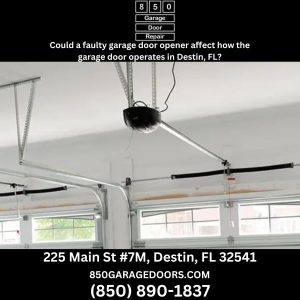
A faulty garage door opener can and does affect every aspect of how the garage door operates, from the speed and smoothness of its movement to the reliability of its safety systems. For homeowners in Destin, FL, the Gulf Coast environment adds urgency to this issue. Salt air, persistent humidity, and intense seasonal heat cycles all work against the components inside your opener, shortening its effective service life and creating conditions where failures occur sooner than expected.
If your garage door is behaving erratically, responding inconsistently, or showing any of the symptoms described above, the opener deserves a professional evaluation before any other repairs are attempted. 850 Garage Doors serves homeowners throughout Destin and the surrounding Florida Panhandle with experienced diagnostic service and reliable repairs. Do not wait for a minor performance issue to become a system failure. Reach out to 850 Garage Doors and get the honest assessment your home deserves.