

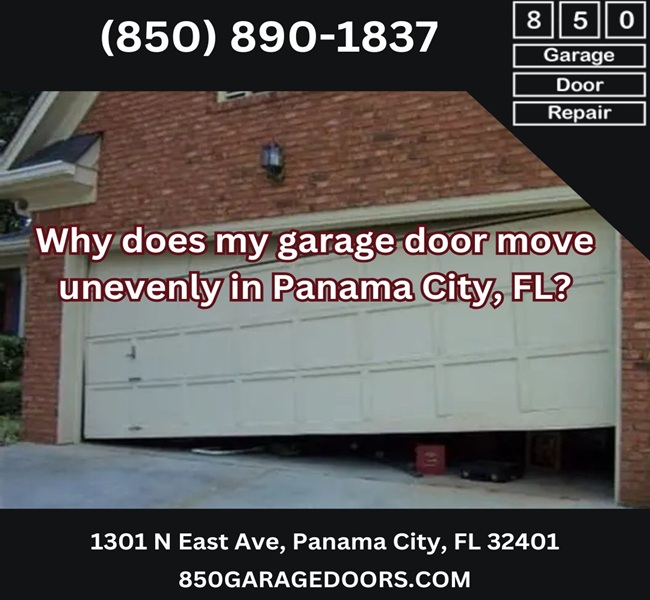
Garage doors are built to glide smoothly, but when yours moves unevenly, it is telling you something is wrong. Whether the door hesitates on one side, jerks during opening, or lags partway up, uneven movement is not just an inconvenience. It is a warning sign that garage door repair may be needed sooner rather than later.
Panama City homeowners face a unique challenge due to the coastal environment. Salt air corrodes metal components faster than in inland Florida, and the region’s humidity cycles create expansion and contraction that can throw door alignment off balance. Without timely garage door repair, these conditions can quickly turn a minor issue into a serious safety or security concern.
This guide walks you through the most common causes of uneven garage door movement, explains why Panama City’s climate makes the problem worse, and outlines when professional garage door repair is the right next step.

Why Is Your Garage Door Moving Unevenly?
Uneven movement always points to an imbalance in how your door’s weight is supported. Garage doors typically weigh 300–600 pounds, distributed across springs, rollers, tracks, and the opener mechanism. When any of these components fail, the door’s weight shifts, causing it to move at different speeds on each side or hesitate during opening and closing.
The most common culprits are:
1. Broken or Weakened Springs
Garage door springs are under extreme tension and lift approximately 90% of your door’s weight. A broken spring is one of the most dangerous failure points. You’ll notice:
- The door feels heavy or won’t open all the way
- One side of the door rises faster than the other
- A loud bang or snap sound before movement stops
- The door appears tilted or crooked
In Panama City, springs corrode from salt air exposure, weakening the metal and causing failure. Springs typically last 7–10 years in coastal areas, compared to 10–15 years inland. Spring repair in Panama City is best handled by professionals—replacing springs under tension is dangerous and requires proper equipment.
2. Misaligned Tracks
Tracks guide your door vertically and horizontally. Even small bends or misalignments force the door to bind, causing it to move unevenly or stick at certain points. This often happens after minor impacts—a basketball, car bumper, or child’s toy hitting the door panel. Florida’s temperature swings also cause metal tracks to expand and contract, gradually shifting alignment.
Signs of track misalignment include:
- Screeching or grinding noises during opening/closing
- Visible gaps between the roller and track on one side
- The door binding or sticking halfway up
- Jerky, uneven movement despite smooth operation previously
3. Worn or Damaged Rollers
Rollers run inside the tracks and must roll smoothly to prevent friction. Over time, rollers wear flat or crack, especially in humid climates where moisture promotes rust. Damaged rollers in Panama City often result from salt air accelerating corrosion. A single failed roller forces the door to pull unevenly, with the damaged side lagging.
Watch for:
- One side of the door rising slower than the other
- Increased noise or grinding from the door mechanism
- Visible rust, cracks, or flat spots on rollers
- The door pulling toward one side as it moves
4. Damaged Door Panels or Sections
Modern garage doors consist of interlocking sections that roll up together. Dents, warping, or rust on one panel increase friction and cause uneven movement. Coastal humidity and temperature cycles warp steel panels, while salt air promotes rust that spreads across the surface. If rust penetrates deep enough, the panel loses structural integrity.
5. Opener Motor Issues
Your garage door opener provides the driving force, but if the motor is losing power, the door won’t move smoothly. This is less common than spring or roller failure but happens when the opener is overworking due to excessive friction from other failed components. Garage door opener problems in Panama City can develop from salt air damage to the motor housing or circuit board corrosion.
How Panama City’s Climate Accelerates Uneven Movement
Your location matters more than you might think. Panama City’s coastal environment creates specific stressors that speed up garage door wear compared to other parts of Florida.
Salt Air Corrosion
Proximity to the Gulf of Mexico means your garage door is constantly exposed to salt-laden air. Salt accelerates rust formation on:
- Steel springs (the most critical component)
- Metal tracks and rollers
- Hinges and fasteners
- Garage door opener motor housing
Rust weakens metal and creates friction points that cause uneven movement. A garage door that functions fine in year one may move unevenly by year three if salt corrosion is unchecked. This is why proper installation and material selection for Panama City matters—galvanized or stainless steel components resist corrosion much longer than standard steel.
Humidity and Thermal Expansion
Florida’s humidity hovers above 70% year-round, and Panama City experiences dramatic seasonal temperature swings. Steel contracts in cooler months and expands in summer heat. This constant cycling loosens fasteners, shifts alignment, and stresses components. Over time, the cumulative effect throws door balance off.
Wooden garage door panels swell in humidity and shrink when dry, warping the door structure. This warping creates drag, forcing the door to move unevenly. Moisture also promotes rust on metal reinforcements inside wooden panels.
Is Uneven Garage Door Movement Dangerous?
Yes. Your garage door weighs 300–600 pounds and moves on a system designed with precision balance. When that balance is lost:
- Risk of sudden drops: A broken spring can cause the door to drop unexpectedly, which is dangerous if you’re underneath or if a child or pet is in the path.
- Damage to vehicles: Uneven movement can cause the door to bind and strike a vehicle parked below.
- Injury risk: Moving parts under tension can pinch fingers or cause impact injuries.
- Door mechanism damage: Continued uneven operation stresses the opener, rollers, and track system, leading to costly repairs.
- Emergency lockout: A failed door can trap your car in the garage, preventing access to your vehicle during an emergency.
If your door is moving noticeably unevenly, stop using it and call a professional immediately. Don’t attempt DIY repairs on springs or opener systems—the tension and electrical components are dangerous without proper training.
How to Diagnose the Problem
Before calling a technician, perform these basic checks to help identify the issue:
Visual Inspection
- Look for visible rust on springs, tracks, or rollers (especially on the side moving slowly).
- Check for dents, warping, or visible damage on door panels.
- Inspect gaps between the roller and track on both sides—they should be even.
- Look for broken or slack cables running alongside the springs.
Listen for Clues
- Grinding or screeching: typically indicates worn rollers or misaligned tracks.
- Loud bang or snap before failure: suggests a broken spring.
- Silence despite attempted operation: indicates the opener isn’t engaging properly.
Feel the Movement
- Use the manual release handle (garage door openers have a red/orange handle) to slowly lift the door by hand. It should be roughly balanced, requiring moderate, even effort. If one side feels much heavier, suspect spring failure on that side.
- Does the door stick at a particular height? That often indicates a track problem at that specific location.
Never open the door fully with a broken spring—you risk serious injury. If your manual inspection suggests spring failure, leave the door closed and contact a professional immediately.
What to Do Next: Your Action Plan
Immediate Steps
- Stop using the door. Continued operation on a damaged system increases risk and damage.
- Document the issue. Note when it started, any sounds you heard, and which side moves slower.
- Call a professional. In Panama City, coastal climate concerns make professional diagnosis critical—corrosion may be happening faster than expected.
Professional Inspection
A qualified technician will:
- Check spring tension on both sides using a balance test
- Inspect rollers for wear, rust, or damage
- Measure track alignment and identify bends or shifts
- Test the opener motor and limit switches
- Assess corrosion damage specific to Panama City’s coastal environment
- Provide a detailed estimate for repairs
Common Repair Solutions
- Spring replacement or repair: Damaged springs must be replaced (not repaired). Spring service includes rebalancing both sides to ensure even movement.
- Roller replacement: Worn rollers are replaced as a set to maintain even movement across all rollers.
- Track straightening or replacement: Minor bends may be straightened; severe damage requires track replacement.
- Rust treatment and protective coating: In Panama City, rust prevention is essential for longevity. Technicians apply protective coatings to prevent future corrosion.
- Opener adjustment or replacement: The opener may need limit switch adjustments or motor repair.
Preventing Future Uneven Movement
Maintenance is your best defense against uneven garage door problems, especially in Panama City’s coastal climate.
Regular Maintenance Schedule
- Monthly: Listen for unusual sounds, check for visible rust or damage.
- Quarterly: Manually operate the door to ensure smooth, balanced movement (with springs intact, using the manual release handle).
- Annually: Have a professional inspect the entire system, including springs, rollers, tracks, and opener. In coastal areas, request rust assessment.
Coastal Corrosion Prevention
- Apply protective coatings: Rust-preventive lubricants and coatings slow salt air corrosion.
- Keep the door clean: Rinse salt residue from the door and tracks during or after exposure to salt spray (especially after storms).
- Consider stainless or galvanized components: When replacing springs, rollers, or other parts, upgrade to corrosion-resistant materials for longer life.
- Install a protective awning or cover: Shade reduces direct salt air exposure, extending component life.
When to Schedule Maintenance
Panama City homeowners benefit from scheduling professional maintenance before spring and fall seasonal transitions when temperature and humidity swings are greatest. This timing catches corrosion and alignment issues before they worsen.
Why Professional Service Matters in Panama City
While some garage door problems might seem like DIY opportunities, the combination of high tension components and coastal corrosion makes professional service essential. Professional garage door opener replacement and spring repair require specialized tools, knowledge of local climate challenges, and safety protocols that prevent injury.
Local technicians understand Panama City’s specific challenges: how salt air affects component lifespan, which materials resist corrosion longest, and how to maintain doors in high-humidity coastal environments. They can spot early rust damage before it becomes severe and recommend proactive upgrades.

Getting Help from 850 Garage Doors
If your garage door is moving unevenly, the solution starts with a professional assessment. The sooner you address the issue, the more you prevent additional damage and reduce emergency repair costs.
850 Garage Doors specializes in Panama City garage door repair and serves the entire North Florida Gulf Coast. Whether you need emergency repair, spring replacement, roller service, or preventive maintenance, our technicians understand coastal challenges and provide solutions built to last in salt air and humidity.
Contact 850 Garage Doors for a free inspection and estimate. We’ll diagnose the cause of uneven movement, explain your options, and get your door moving smoothly again.