

Understanding Why Your Garage Door Won't Open
The most common reasons a garage door won’t open include dead remote batteries, misaligned safety sensors, broken springs, power issues, and accidentally engaged locks. When your garage door refuses to budge on a busy morning, it can throw off your entire schedule and leave you feeling frustrated. Understanding the typical culprits behind garage door malfunctions helps you quickly identify whether you're dealing with a simple fix or a situation that requires garage door repair from a professional. For Panama City homeowners, knowing these common issues can save time and prevent minor problems from becoming major headaches.
Common Reasons Your Garage Door Won't Open
Dead Batteries in Your Remote
One of the simplest and most overlooked reasons for a non-functioning garage door is dead batteries in your remote transmitter. Many homeowners immediately assume something major has broken when the real culprit is just weak or depleted batteries. If you notice your remote requires you to be closer to the door than usual or needs multiple button presses to work, the batteries are likely dying. Try replacing the batteries with fresh ones and test the remote again. If your wall-mounted button still operates the door but your remote doesn't, this confirms the battery issue. Keep spare batteries on hand so you're never caught off guard.
Blocked or Misaligned Photo-Eye Sensors
Modern garage doors include photo-eye sensors positioned on either side of the door near the ground. These sensors send an invisible beam across the doorway to detect obstructions and prevent the door from closing on people, pets, or objects. When these sensors become blocked by dirt, spider webs, or debris, or when they get knocked out of alignment, your door may refuse to close or open properly. In Panama City's humid climate, dirt and moisture can accumulate on the sensor lenses more quickly. Check both sensors to ensure they're clean and pointing directly at each other. Most sensors have small LED lights that indicate when they're properly aligned.
| Issue Type | Quick Check |
| Remote Control Problems | Test with wall button to confirm if issue is with remote or opener system |
| Sensor Misalignment | Look for blinking LED lights on sensors indicating alignment problems |
| Spring Failure | Door feels extremely heavy when lifting manually or won't stay open |
| Power Issues | Check if opener light turns on and verify circuit breaker hasn't tripped |
| Track Obstructions | Visually inspect tracks for visible debris, dents, or objects blocking path |
Broken Torsion Springs
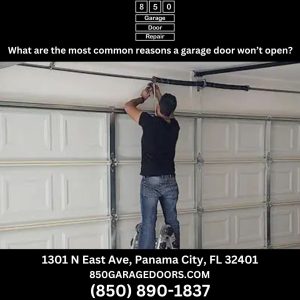
Torsion springs are the hardworking components that counterbalance your garage door's weight, making it easy to lift. These springs are under extreme tension and typically last between 10,000 and 20,000 cycles before they fail. When a spring breaks, you'll often hear a loud bang that sounds like a firecracker or gunshot. A door with broken springs will feel extremely heavy if you try to lift it manually, and your opener may struggle or refuse to lift the door at all. The opener's motor isn't designed to lift the full weight of the door without the springs' assistance. If you suspect broken springs, avoid attempting to open the door and never try to replace springs yourself, as they pose serious safety risks.
Disconnected Trolley or Emergency Release
Every garage door opener has an emergency release cord, usually red, that disconnects the trolley from the opener carriage. This allows you to manually open the door during power outages. Sometimes this cord gets pulled accidentally by tall items stored in the garage, by children playing, or during cleaning. When disconnected, your opener will run but the door won't move because the trolley isn't engaged with the chain or belt drive. Look for the red cord hanging from the opener track. If it's been pulled, you'll need to re-engage the trolley by pulling the cord toward the opener motor while the door is in the closed position, then run a complete open and close cycle.
Power Outage or Tripped Circuit Breaker
Sometimes the solution is as straightforward as checking your power source. If your garage door opener isn't responding at all, no lights, no sounds, verify that the unit is receiving power. Check if the outlet is functioning by plugging in another device, and inspect your home's electrical panel for tripped breakers. During Florida's frequent thunderstorms, power surges can trip breakers or temporarily knock out electricity. Additionally, ensure the power cord hasn't been accidentally unplugged. Some opener models have a reset button that may need to be pressed after power restoration. If your opener plugs into a GFCI outlet, check if it has tripped and needs to be reset.
Worn or Damaged Garage Door Cables
Lift cables work alongside your springs to raise and lower the door smoothly. These steel cables run along both sides of the door, connecting to the bottom corners and threading through the pulley system. Over time, cables can fray, rust, or snap due to normal wear and the corrosive effects of coastal humidity common in Panama City. When a cable breaks, your door may hang unevenly, tilt to one side, or refuse to open. You might notice the door sitting crooked even when closed. Cable problems require immediate professional attention because operating a door with damaged cables can cause the door to fall suddenly or become completely jammed in the tracks.
Lock Button Activated on Wall Panel
Many garage door wall panels feature a lock button designed to prevent the door from opening when you're away from home. This vacation lock mode disables remote control operation for security purposes. The problem occurs when someone accidentally presses this button without realizing it. If your wall button works but your remotes don't, check if a lock indicator light is illuminated on your wall panel. The button might be labeled as lock, vacation mode, or simply show a padlock symbol. Press and hold the button for a few seconds to deactivate the lock feature. This is one of those frustrating situations where nothing is actually broken, just a simple setting that got changed.
Frozen or Stuck Garage Door in Cold Weather
While Panama City doesn't experience harsh winters, occasional cold snaps can still cause garage door problems. When temperatures drop, moisture on the garage floor can freeze and essentially glue your door to the ground. This typically happens when snow or rain gets tracked into the garage and pools at the base of the door. If your opener strains to lift the door or the motor runs but the door doesn't budge, check for ice formation along the bottom seal. Never force the opener to break through ice, as this can strip the opener gears or damage the door panels. Instead, carefully chip away the ice or use warm water to melt it before attempting to open the door.
Worn Garage Door Opener Gears
Inside your garage door opener motor, plastic or metal gears transfer power from the motor to the chain, belt, or screw drive. After years of daily use, these gears can wear down or strip, especially if the door has been operating with other unresolved issues like broken springs or misaligned tracks. When opener gears fail, you'll typically hear the motor running but see no movement in the chain or belt. Some openers emit a grinding or whirring sound when gears are stripped. This type of mechanical failure usually develops gradually, with the door opening more slowly or struggling before it finally stops working altogether.
Obstruction in the Door Tracks
Your garage door rolls up and down on metal tracks mounted on both sides of the opening. These tracks need to be clear and properly aligned for smooth operation. Over time, dirt, hardened grease, small rocks, or other debris can accumulate in the tracks and create resistance or complete blockage. In Panama City's sandy environment, fine sand particles can work their way into tracks and build up over time. Dents in the tracks from accidental impacts can also prevent the rollers from moving smoothly. Inspect both tracks carefully along their entire length, looking for any visible obstructions, bends, or gaps between the rollers and track walls.
When to Stop and Call a Professional
Safety Risks of DIY Spring Repairs
Garage door springs are under tremendous tension, storing enough energy to lift hundreds of pounds. When this tension releases unexpectedly, it can cause severe injuries including broken bones, lacerations, or even fatalities. Professional technicians use specialized tools and have extensive training to safely handle spring replacements. Attempting DIY spring repairs without proper equipment and knowledge puts you at serious risk. Even watching online tutorials doesn't adequately prepare someone for the real-world dangers involved. The few dollars you might save aren't worth the potential medical bills or permanent injury. Always leave spring work to trained professionals who have the right tools and insurance coverage.
Signs of Serious Mechanical Failure
Certain symptoms indicate problems that go beyond simple troubleshooting and require professional diagnosis. If your door opens unevenly, jerks during operation, makes loud grinding or scraping noises, or falls rapidly instead of lowering smoothly, these are red flags of serious mechanical issues. Visible damage to panels, bent tracks, or cables coming off their pulleys all demand immediate professional attention. When you notice your door struggling more each day or requiring multiple attempts to open or close, the problem is likely worsening and could lead to complete failure or safety hazards. Professional technicians can identify underlying issues before they become emergencies and ensure all safety features are functioning correctly.
Conclusion: Keeping Your Panama City Garage Door Running Smoothly
Understanding what typically causes garage doors to malfunction helps you respond appropriately when problems arise. While some issues like dead batteries or accidentally engaged locks are simple fixes you can handle yourself, many garage door problems require professional expertise to resolve safely. Regular maintenance and prompt attention to minor issues prevent them from escalating into costly repairs or dangerous situations. For Panama City homeowners, the coastal environment adds extra wear on garage door components, making professional inspections and maintenance even more valuable.
Need Garage Door Repair in Panama City, Florida?
When your garage door won't open and you've ruled out the simple fixes, it's time to call in the experts. 850 Garage Doors serves Panama City and the surrounding areas with professional garage door repair, maintenance, and installation services. Our experienced technicians understand the unique challenges that Florida's climate presents for garage door systems and can quickly diagnose and resolve any issue. Don't let a malfunctioning garage door disrupt your daily routine or compromise your home's security. Visit https://www.850garagedoors.com/ to learn more about our services and schedule your repair appointment today.