

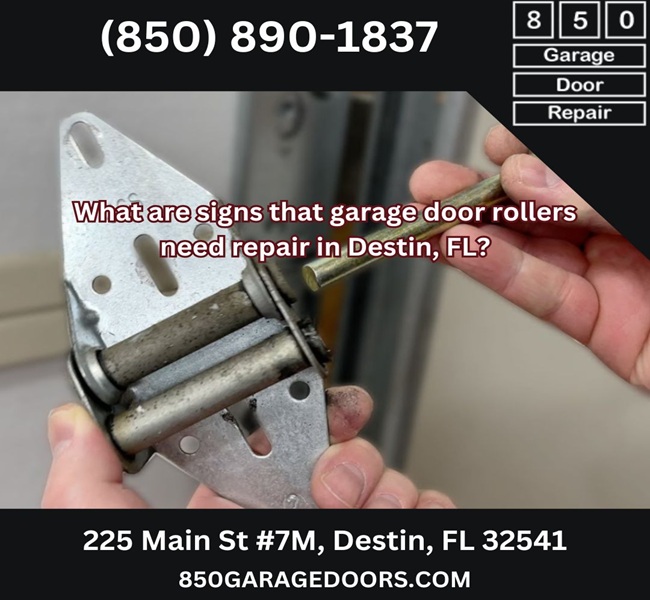
Why Destin's Gulf Coast Climate Accelerates Roller Wear
Garage door rollers are not built equally for every environment. Destin sits directly along the Gulf of Mexico, and the combination of salt air, high humidity, and intense seasonal heat creates conditions that degrade roller materials at a pace far faster than what homeowners in drier or cooler climates experience. This is not a matter of product quality alone. It is a matter of environment. Understanding what the coastal climate does to your rollers helps explain why regular inspections matter more here than in most other parts of the country.
Salt Air and Humidity Corrode Metal Rollers Faster Than Inland Areas
Metal garage door rollers, particularly those made from standard steel, are highly vulnerable to the salt air that moves inland from the Gulf. Salt particles settle on metal surfaces and accelerate oxidation. What might take years to develop in a location like Atlanta or Birmingham can begin showing up on Destin rollers within a single season. Once corrosion takes hold on the roller stem or the bearing, the roller no longer spins freely inside the track. Instead, it drags. That dragging motion places uneven strain on the track itself, on the cables, and on the opener motor.
High humidity compounds the problem. Moisture gets into gaps between components and stays there, especially during Florida's long summer months. A roller that appears fine on the outside may already have internal bearing corrosion that only shows up when the door is under load.
Repeated Heat Cycling Cracks and Flattens Nylon Rollers Over Time
Nylon rollers are often recommended as an upgrade over standard steel because they operate more quietly and resist rust. In Destin, however, nylon faces its own set of challenges. Temperatures in the Florida Panhandle frequently climb above 95 degrees during summer, and garage interiors can exceed that significantly. The repeated cycle of intense heat followed by cooler evening temperatures causes nylon to expand and contract at a rate that gradually degrades its structural integrity.
Over time, nylon rollers may develop small cracks along the wheel edge, or they may begin to flatten slightly on one side from prolonged contact pressure under heat. Either condition reduces the roller's ability to maintain smooth contact with the track, which introduces vibration and noise into every cycle of the door.
Six Signs Your Garage Door Rollers Are Failing
Roller problems rarely appear all at once. They tend to develop gradually, which means many homeowners in Destin overlook the early signs until the situation escalates. Here are the six most common indicators that your rollers need professional Garage Door Rollers Repair.
Grinding, Squealing, or Clicking Sounds During Operation
Noise is almost always the first sign. A garage door in good working condition operates with minimal sound. When you begin hearing a consistent grinding noise, a high pitched squeal, or a rhythmic clicking with each panel section that passes through the track, the rollers are likely the source. Grinding indicates metal on metal contact, which happens when a bearing has failed or when corrosion has seized the roller wheel in place. Clicking often points to a chipped or cracked roller wheel that catches the track edge with each rotation. Neither sound should be ignored or treated as a minor inconvenience.
Visible Cracks, Flat Spots, or Worn Edges on the Roller Wheel
You can often spot roller damage with a basic visual inspection. With the door closed and the opener disconnected, take a flashlight and look at each roller along the track on both sides of the door. A healthy roller wheel sits evenly in the track and shows a smooth, uniform surface. A failing roller may show visible cracks running through the nylon material, flat spots where the wheel has worn unevenly, or chipped edges where the wheel contacts the rail. Any of these conditions mean the roller is no longer doing its job properly and should be addressed before it causes secondary damage.
The Door Shakes, Wobbles, or Moves Unevenly on the Track
When rollers are in good condition, the door glides smoothly and evenly from bottom to top and back again. When one or more rollers are worn, the door loses that consistency. You may notice the door shaking slightly as it moves, or one side appearing to lag behind the other. In more advanced cases, the door may visibly tilt to one side during operation. This is not just a comfort issue. An uneven door places asymmetric load on the torsion spring and cables, which can accelerate wear or even cause a sudden component failure if left unaddressed.
Rollers That Appear Misaligned, Loose, or Sitting Away From the Rail
A roller that has partially come off the track or is visibly sitting at an angle inside the rail is a clear warning sign. This typically happens after a bearing has failed completely or after physical impact has knocked the roller out of its proper position. Do not attempt to force the door to operate in this condition. A misaligned roller can cause the door to jump off the track entirely, which creates a safety hazard and can damage the track, the door panels, and the opener at the same time.
Gaps Between the Roller Stem and the Track
Each roller stem passes through a hinge bracket and sits inside the vertical or curved section of the track. When everything is properly fitted, the roller sits flush against the track interior with minimal clearance. If you notice a visible gap between the roller and the track wall, that is a sign that either the roller has worn down in diameter or the hinge bracket has become loose. Either way, the roller is no longer guiding the door panel correctly, and the track is absorbing movement stress it was not designed to handle alone.
Slower or Noticeably Heavier Door Movement
If your garage door opener suddenly seems to be working harder than usual, or if the door moves noticeably slower on manual operation, worn rollers may be the reason. A properly functioning roller reduces friction so the door lifts and lowers with minimal resistance. Seized or heavily corroded rollers create drag throughout the entire travel path. The opener compensates by drawing more power, which over time shortens the lifespan of the motor. On manually operated doors, the difference is even more noticeable because you feel the resistance directly. Homeowners who depend on Garage Door Openers for daily access should take this added strain seriously, as prolonged overloading can reduce motor life well before its expected service window.
| Symptom | Likely Cause |
|---|---|
| Grinding or squealing noise during operation | Failed bearing or corrosion seizing the roller wheel |
| Visible cracks or flat spots on the roller wheel | Heat cycling damage or age related material breakdown |
| Door shaking or moving unevenly on the track | One or more rollers worn unevenly, causing imbalanced load |
| Roller visibly off track or sitting at an angle | Complete bearing failure or physical impact to the door |
| Door feels heavier or opener sounds strained | Roller corrosion creating friction and drag across travel path |
What Worn Rollers Do to the Rest of Your Garage Door System
One of the most important things to understand about roller problems is that they do not stay isolated. Because every component of a garage door system works together under significant mechanical tension, a failure in one area creates a chain reaction. Rollers that are worn, seized, or misaligned do not simply make the door noisy. They actively damage the components around them.
How Damaged Rollers Transfer Stress to Tracks and Springs
The tracks on either side of your garage door are engineered to work with rollers that spin freely. When a roller drags instead of rolling, it scrapes along the inside wall of the track and gradually bends or warps the track out of its proper alignment. A bent track then causes every other roller to work harder to navigate through the compromised section, compounding the wear across the entire set.
The torsion spring, which counterbalances the weight of the door, is also affected. When rollers create additional resistance, the spring has to work against both the weight of the door and the friction from the dragging rollers. Torsion springs already operate under enormous tension, and adding unnecessary load shortens their service life. In Destin homes where the humid and salty environment already accelerates spring corrosion, a roller problem can push a spring well past its safe operating limit ahead of schedule, making Broken Garage Door Spring Repair an urgent need alongside addressing the rollers themselves.
Addressing roller issues early is not just about the rollers themselves. It is about protecting a much larger and more expensive system from unnecessary damage.
Roller Repair vs. Roller Replacement: What Destin Homeowners Usually Need
When a homeowner notices one or more of the symptoms described above, the natural next question is whether the rollers need repair or full replacement. The answer depends on a few factors, including how many rollers are affected, what material the rollers are made from, and how long the damage has been progressing.
When a Repair Call Is Enough
In some cases, the issue is limited to one or two rollers that have come loose from their hinge brackets or have minor corrosion that has not yet compromised the wheel itself. A professional technician can address these situations by resecuring the roller, cleaning the bearing, or applying appropriate lubrication to restore proper function. If the track is still in good alignment and no secondary damage has occurred, a targeted repair visit may be all that is needed to get the door operating correctly again.
When a Full Roller Replacement Is the Smarter Move
When multiple rollers across the door show signs of wear, or when the existing rollers are the original set on a door that is more than five years old in a coastal environment, replacement is typically the more practical and cost effective decision. Replacing just one or two worn rollers while leaving the rest at the same age and wear stage often means a return visit within a short period. A full roller replacement gives the entire door a consistent set of components that will wear at the same rate and behave predictably under load.
For Destin homeowners specifically, upgrading from standard steel rollers to sealed bearing nylon rollers during a replacement offers meaningful advantages. Sealed bearings resist moisture intrusion better than open bearings, and nylon wheels eliminate the metal on metal contact that accelerates track wear in high humidity environments.
Get Your Rollers Inspected by a Local Destin Garage Door Tech
Roller problems in Destin tend to develop faster than homeowners expect, and the warning signs are easy to miss until the situation has already progressed to the point of secondary damage. If your garage door has been making unusual sounds, moving unevenly, or simply does not feel the way it used to, the rollers deserve a professional look before the issue escalates.
The signs covered in this post, ranging from noise and visible wear to changes in door movement and track contact, are the same indicators that experienced technicians look for during a diagnostic inspection. Catching them early means a simpler repair, less impact on surrounding components, and a safer, more reliable door.
The team at 850 Garage Doors serves Destin and the surrounding Florida Panhandle communities with local knowledge of what Gulf Coast conditions do to garage door hardware. Whether you have noticed one symptom or several, a professional inspection gives you a clear picture of what is happening and what needs to be done. In some cases, that inspection may also reveal that sustained roller friction has stressed the drive unit enough to recommend a Garage Door Opener Replacement as part of the overall service plan. Visit 850garagedoors.com or give us a call to schedule your roller inspection today.